RESEARCH RESULTS
Volatile Organic Compounds as Biomarker for Fruit Quality
During the storage of fruit small amounts of gases (Volatile Organic Compounds, VOCs) are released. The composition of these VOCs is a BIOMARKER for the quality of the fruit. Fruit flies have known this for a long time: they know how to find rotting fruit flawlessly. The aim of this research is to identify measurable VOCs that can serve as a biomarker for fruit quality, with a primary focus on red currant and pear during long-term Controlled Atmosphere (CA) storage.
About the research
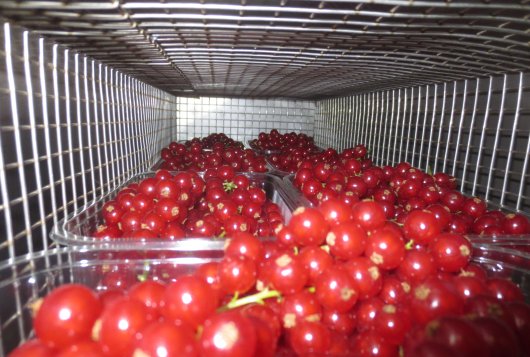
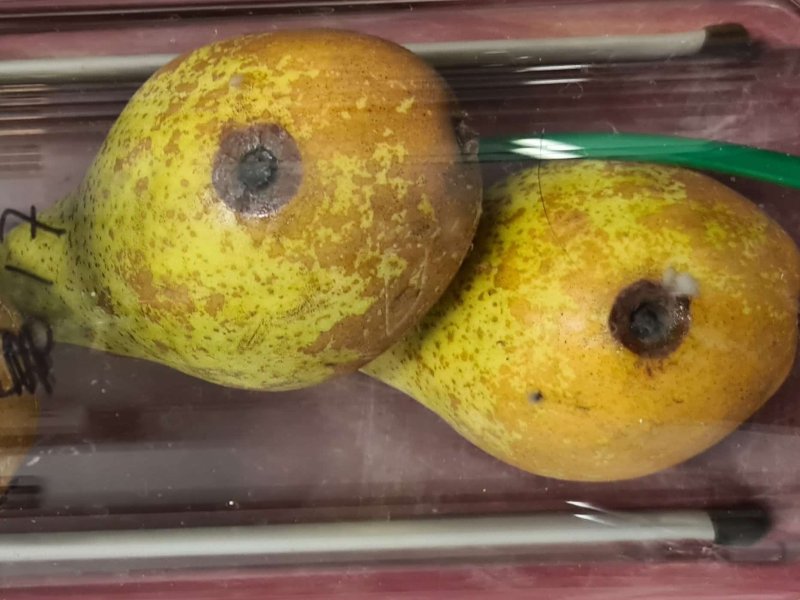
During three storage seasons lab experiments have been conducted with red currants. VOCs and fruit quality were regularly analysed. In another lab experiment, pears were infected with various fungal species, including Cadophora (fish eye rot, a.k.a. side rot). Produced VOCs and mold growth have been monitored. Many ad hoc practical measurements have been carried out to get an impression of the VOCs that occur in commercial storage rooms in specific situations.
Scientific innovation
A correlation has been shown between VOCs and the quality of red currants during long-term CA storage. In lab experiments VOCs were identified that are specific to common fungi in pear storage.
Relevance for the sector
Monitoring Volatile Organic Compounds gives an indication of the quality of fruit during storage, and can therefore help in finding the optimal sales moment.
Take away message
Gases released during the storage of fruit are Volatile Organic Compounds (VOCs). Some of these VOCs are an indicator of fruit quality status, and those VOCs are measurable in CA storage rooms.
Project information
How to maintain high product quality of fruit and vegetables while reducing the use of chemical pesticides and environmentally harmful packaging? How do cooperating parties in the chain ensure they can continue supplying fresh, high-quality products? And to what extent van this increase consumption of fruit and vegetables? These and other research questions were examined in the Fresh on Demand project.
Fresh on Demand is co-financed by the Ministry of Agriculture, Nature and Food Quality (TKI, Top Consortia for Knowledge and Innovation), Fresh Produce Center and an extensive group of private companies from growers to suppliers of sensors and technologies.
Want to know more?
Curious to learn more about the results of the project or what experts of Wageningen University & Research can do for your company? Please contact our experts.