RESEARCH RESULTS
Taste and Non-destructive Flavour Prediction
The flavour of a tomato is a critical factor that can influence consumer preference and satisfaction. Therefore, assessing the flavour of tomatoes accurately and efficiently is crucial for maintaining quality.
About the research
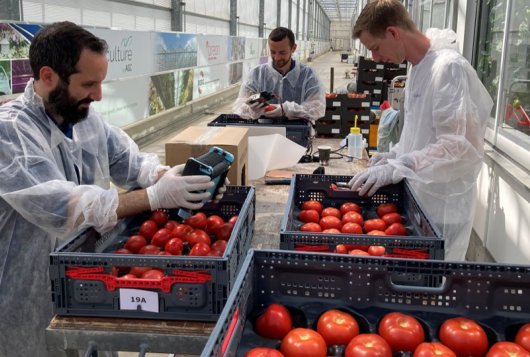
The aim of the project is to apply non-destructive optical and radio frequency based sensors for measuring quality parameters of tomato, including Brix, acidity, firmness and human flavour perception. To this end, 10 measurement sessions with twenty varieties each were carried out. In these sessions, several tomato cultivars grown under different conditions were measured both destructively, assessed by sensory panels and measured with a broad range of non-destructive sensors. Several tomato sensorial parameters were predicted based on non-destructive measurements. We also successfully developed a model to predict liking with near-infrared (NIR) spectroscopy using a commercially available sensor.
Scientific innovations
We compared a wide range of sensors and their ability to predict various sensorial attributes on a large range of tomato varieties grown under different conditions. This resulted in a broadly applicable taste model for the sector. The model will be made available for a commercial sensor. Further development and improvement -beyond the data acquired during the project- will help to increase the model robustness. Another interesting finding was that data from novel sensors using radio frequencies in the GHz range also showed good correlations with tomato quality parameters.
Relevance for the sector
The model offers a quick, objective, and less labour-intensive alternative to traditional sensory analysis and has the potential to transform the industry by improving flavour prediction, breeding selection, reducing waste, and increasing productivity.
Relevance for the sector
The model offers a quick, objective, and less labour-intensive alternative to traditional sensory analysis and has the potential to transform the industry by improving flavour prediction, breeding selection, reducing waste, and increasing productivity.
Example of predicted liking based on non-destructive measurements vs. liking as scored by a sensory panel. Graph from WUR
Take away message
The model offers a quick, objective and less labour-intensive alternative to traditional sensory analysis.
Project information
How to maintain high product quality of fruit and vegetables while reducing the use of chemical pesticides and environmentally harmful packaging? How do cooperating parties in the chain ensure they can continue supplying fresh, high-quality products? And to what extent van this increase consumption of fruit and vegetables? These and other research questions were examined in the Fresh on Demand project.
Fresh on Demand is co-financed by the Ministry of Agriculture, Nature and Food Quality (TKI, Top Consortia for Knowledge and Innovation), Fresh Produce Center and an extensive group of private companies from growers to suppliers of sensors and technologies.
Want to know more?
Curious to learn more about the results of the project or what experts of Wageningen University & Research can do for your company? Please contact our experts.