RESEARCH RESULTS
Optimising the postharvest chain for papaya
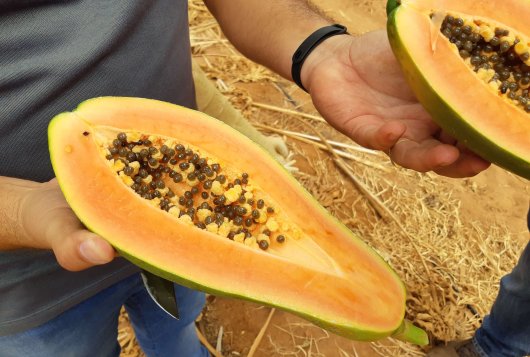
Research work in the subproject ‘Optimisation of the tropical fruit supply chain’ aimed at achieving a good papaya quality for the consumer, while taking into account sustainability requirements. This topic is highly relevant for the shipment of ‘Tainung’ papaya from Brazil to the European market. Sea freight instead of air freight brings economic and environmental advantages. But at the same time the challenge and goal is to maintain papaya quality as high as possible.
About the research
The main points of attention for papaya quality are better control of the ripening, less water loss and mould reduction. In trials on site in Brazil, but also in shipments from Brazil to the Netherlands, tests were done with new technologies which are or will soon become commercially available. Both MA (Modified Atmosphere) packaging (PerfoTec) and the use of hypobaric storage chambers (RipeLocker) have given good results, especially on the control of ripening and reduction of water loss. Both technologies will be further optimised for papaya export.
Scientific innovations
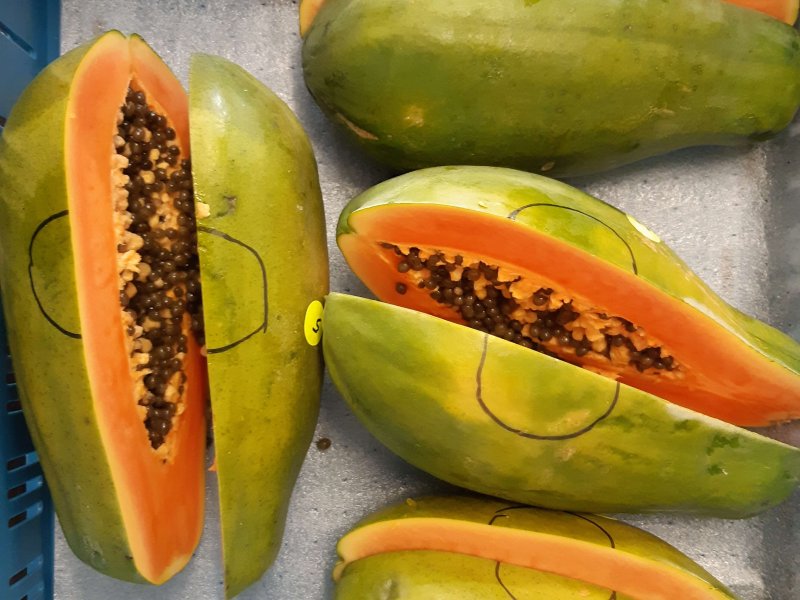
Colour analysis and Near Infrared Spectroscopy have been explored as objective and non-destructive techniques for evaluation of papaya maturity and quality. The colour analysis by the ‘Smart Colour Inspector’ proved to be useful for external and internal colour analyses.
Relevance for the sector
It is essential that the long transport time from production site to the shelf in European supermarkets occurs at optimal conditions. First of all, maintaining the cold chain is of high importance. The further success of MA or hypobaric storage depends on the quality at harvest (low mould development risk). Under these conditions, both technologies are very promising to fulfil consumer demands and avoid product waste.
Relevance for the sector
It is essential that the long transport time from production site to the shelf in European supermarkets occurs at optimal conditions. First of all, maintaining the cold chain is of high importance. The further success of MA or hypobaric storage depends on the quality at harvest (low mould development risk). Under these conditions, both technologies are very promising to fulfil consumer demands and avoid product waste.
Take away message
Working together throughout the supply chain is the key to realise high quality fresh products. The project partnership in this papaya project brought various chain partners and experts together which provided an unique chance to improve external and internal papaya quality.
Project information
How to maintain high product quality of fruit and vegetables while reducing the use of chemical pesticides and environmentally harmful packaging? How do cooperating parties in the chain ensure they can continue supplying fresh, high-quality products? And to what extent van this increase consumption of fruit and vegetables? These and other research questions were examined in the Fresh on Demand project.
Fresh on Demand is co-financed by the Ministry of Agriculture, Nature and Food Quality (TKI, Top Consortia for Knowledge and Innovation), Fresh Produce Center and an extensive group of private companies from growers to suppliers of sensors and technologies.
Want to know more?
Curious to learn more about the results of the project or what experts of Wageningen University & Research can do for your company? Please contact our experts.