RESEARCH RESULTS
Optimal harvest moment of melons
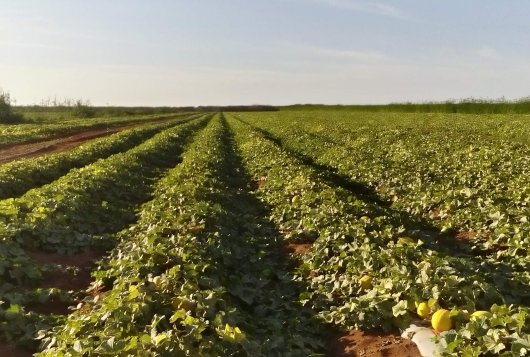
In the GreenCHAINge project an innovative “smart chain” was developed with the intention of improving the intrinsic quality – and uniformity - of fresh fruit and vegetables on the shelf. In the context of research in Work Package 2, the subject was melons. Melon quality, and in particular the post-harvest quality of new varieties, is met by high demands from the European market, which requires a pristine condition of peel quality and high quality of flavour.
Objective
Harvesting melons at the right moment is crucial to ensure high-quality, tasty melons with a beautiful peel. Harvesting melons at fully mature stage is most optimal for sweetness and the desired aroma. However, to increase shelf life, melons are harvested already at a partially mature stage. Optimal harvest moment is crucial to obtain high quality and uniform melons on the shelf. In this study, we investigated what useful measures are to determine optimal harvest time.
Experiment and Results
Maturity & Quality
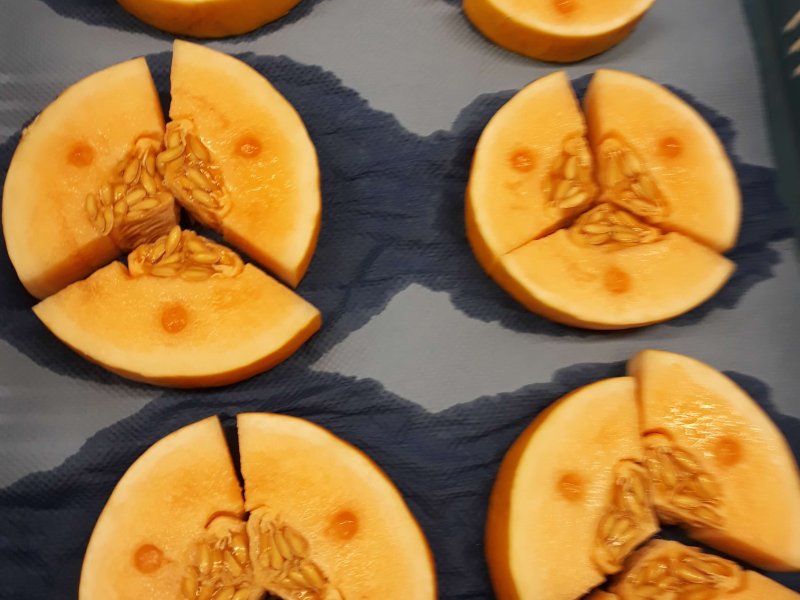
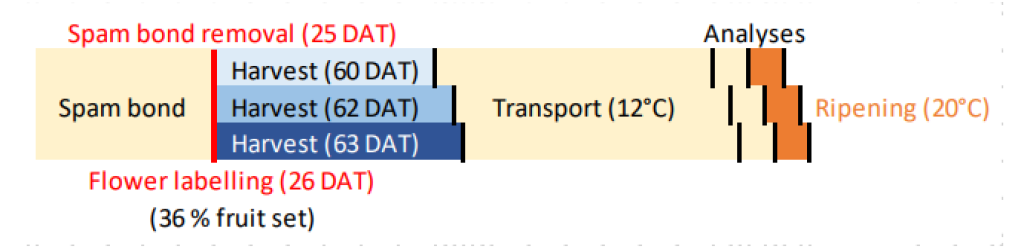
The quality of melons harvested at 63, 65 and 67 DAT (days after transplant; days after the melons were transplanted from seedling stage to open ground) was measured. The maturity stages were correlated with the quality characteristics in order to identify the optimal harvest time.
Melons harvested 67 days after transplant showed increased levels of BRIX and brown speckles, compared to melons harvested at 63 and 65 DAT. No increase in weight was observed, assumed to be caused by variations in flowering moment.
Early versus Late Flowering
Early-flowering melons, meaning flowering one day after spam bond removal (DASBR) and harvested 65 days after transplant, were heavier, showed higher BRIX levels, and a darker peel compared to later flowering melons (3 or 5 DASBR).
They also showed more peel disorders, such as brown speckles and gray areas. The peel-colour progression rate was the same for both early and late flowering melons.
Conclusion
Measuring maturity at various stages helps to optimise harvest time, increasing initial quality as the cornerstone of high quality throughout the chain. DAT and DASBR are useful measures to establish optimal harvest time, when combined with post-harvest maturity measurements.
More information?
This project was commissioned and funded by Frankort & Koning and East-West Seed and cofunded by Top Sector for Horticulture & Starting Materials.
More detailed information about this research result can be found at: https://edepot.wur.nl/563036
Questions? Please contact our experts through the contact form below