RESEARCH RESULTS
Blueberry Quality in the Chain
There is a year-round market demand for high quality blueberries. Textural parameters as firmness and mealiness are key. The project goal is to develop a reliable, fast and objective assessment method that can support quality management in the industry.
About the research
The research has delivered:
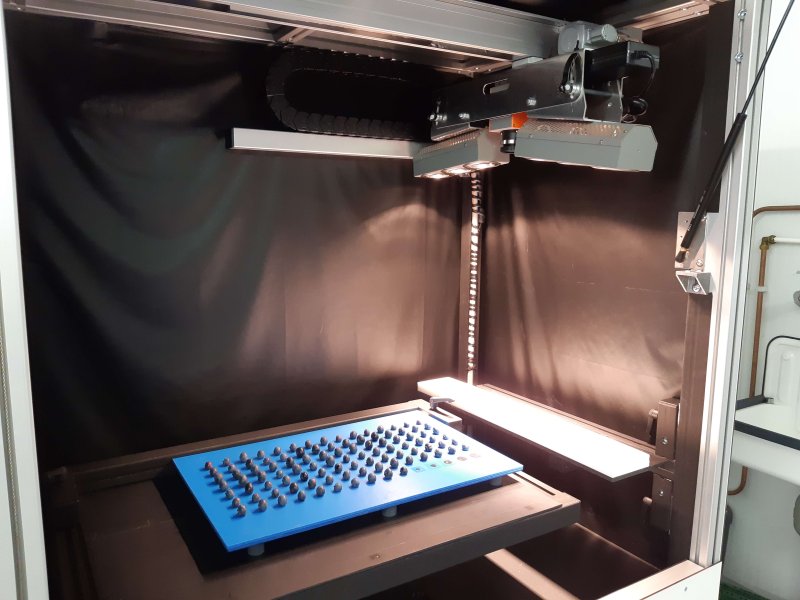
- an assessment method to measure the firmness of blueberries based on Hyperspectral Imaging (HSI), non-destructive and very fast.
- accuracy and robustness of the assessment method validated with blueberries from different cultivars, growers and distribution chains.
- sample size defined: how many blueberries in a batch should be measured to achieve the necessary accuracy.
Scientific innovations
Texture is the most complex (sensorial) quality aspect to be reliably measured. The application of HSI to predict firmness, mealiness and internal breakdown in blueberries is a new development. In addition, a number of other techniques, from Terahertz radiation to an impact deceleration based instrument, have been studied and insight in their potential is now available.
Relevance for industry
Year-round blueberries supply is currently achieved through the geographical segregation of production and relies on global logistics to ensure (long) distance distribution. At the same time blueberries should be picked at a near to full ripe stage, which makes quality management very challenging. The developed assessment method is fast and objective and can support the industry to manage blueberry quality successfully and avoid unnecessary losses in the supply chain.
Take away message
To manage blueberry quality successfully, it is important to measure the texture of the fruit in a fast and non-invasive manner. Hyperspectral imaging is a market-ready technique to do so.
Project information
How to maintain high product quality of fruit and vegetables while reducing the use of chemical pesticides and environmentally harmful packaging? How do cooperating parties in the chain ensure they can continue supplying fresh, high-quality products? And to what extent van this increase consumption of fruit and vegetables? These and other research questions were examined in the Fresh on Demand project.
Fresh on Demand is co-financed by the Ministry of Agriculture, Nature and Food Quality (TKI, Top Consortia for Knowledge and Innovation), Fresh Produce Center and an extensive group of private companies from growers to suppliers of sensors and technologies.
Want to know more?
Curious to learn more about the results of the project or what experts of Wageningen University & Research can do for your company? Please contact our experts.