
Refrigerant Transition: Decision Tool
The refrigerant transition: from complex obligation to strategic opportunity
The global phase‑out of HFC refrigerants is in full progress. Permitted GWP values are being reduced step by step, meaning many current cooling systems will no longer comply with regulations within a few years. This affects the entire agro‑food chain — from growers to distribution centres.
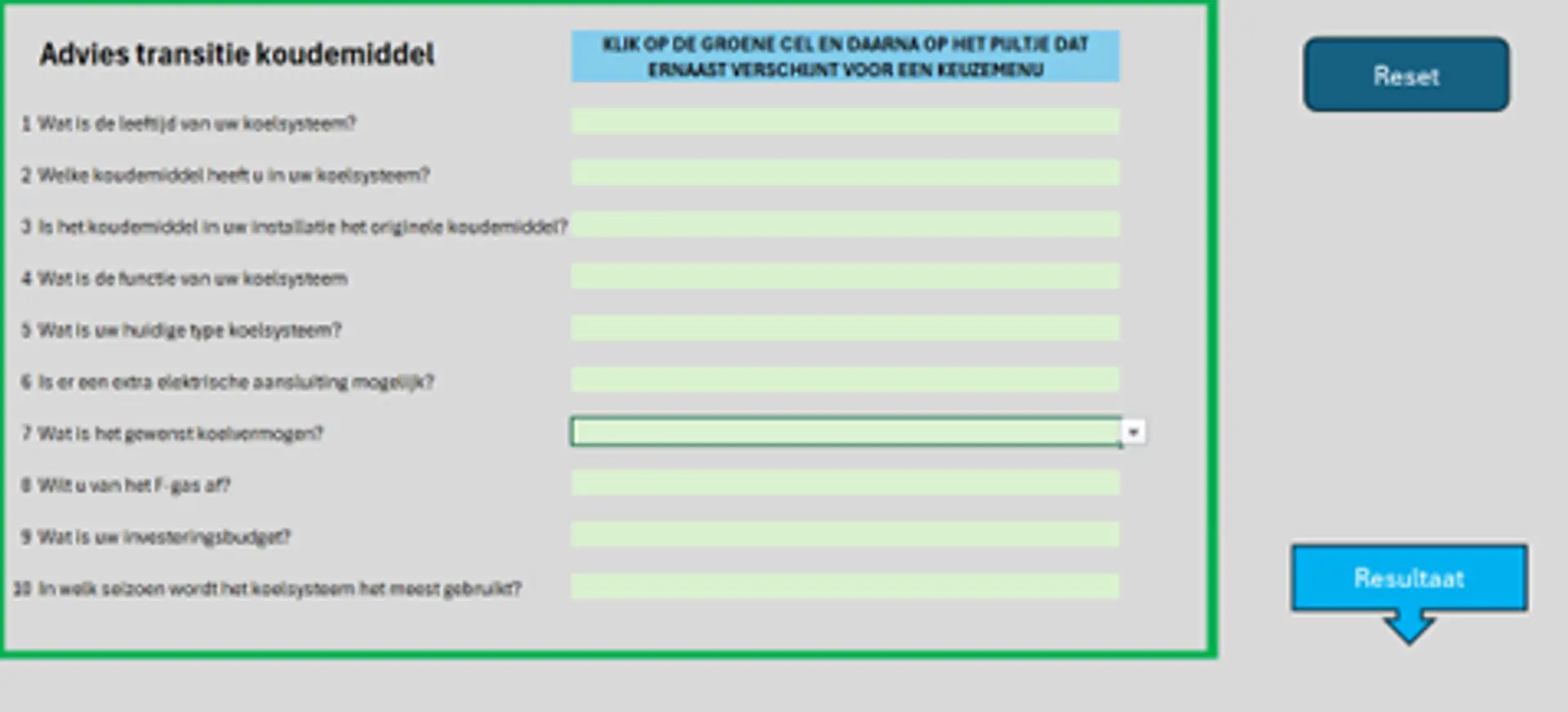
The project consortium includes fruit cooperatives, industry associations, refrigeration technology suppliers, growers, consultants, and auction organisations. Together, we have developed an independent decision tool. You answer ten questions and then receive an independent, free recommendation for your refrigerant transition.
More About the Refrigerant Transition
The transition to natural refrigerants affects the entire chain: installers, suppliers, growers, storage operators, auction organisations, logistics service providers, and distribution centres. All of them will face new technical requirements, limited refrigerant availability, and investment decisions that directly affect business continuity. The sector requires:
- Independent and clear information about the available refrigerant options
- Insight into investment scenarios that match company size and existing installations
- Practical guidance for meeting future regulatory changes
This Kennis-op-Maat (KoM) project aims to support companies with a practical, applicable approach. We have developed a decision tool that helps businesses compare different scenarios for their specific situation. The tool can also serve as a strong starting point for discussions between storage operators and suppliers.
This project receives financial support from the Knowledge and Innovation Agenda Agriculture, Water, and Food. Within the KIA, the business community, knowledge institutions, and the government collaborate on innovations to deliver safe, healthy food (and a green living environment) for 9 billion people in a resilient world.